Read Modern Myths and Medical Consumerism: The Asclepius Complex - Antonio Lanfranchi | ePub
Related searches:
Modern Myths and Medical Consumerism: The Asclepius Complex
Modern Myths and Medical Consumerism Taylor & Francis Group
Lanfranchi, AK Modern Myths and Medical Consumerism: The
Medical consumerism and the modern patient - NCBI - NIH
Medical consumerism and the modern patient - SAGE Journals
Lanfranchi, A. K. Modern Myths and Medical Consumerism: The
Medical consumerism and the modern patient: successful ageing
Spiritual myths of consumption: puritanism, transcendentalism and
Myths and social structure: The unbearable necessity of mythology
Michel Foucault and the Problematics of Power: Theorizing DTCA
Consumerism in Health Care: Challenges and Opportunities
Monumental Myths of the Modern Medical Mafia and Mainstream
Pfizer and Moderna COVID-19 vaccines are not vaccines – the
Consumerism and Modern Healthcare - ABCSrcm - Expert Medical
(PDF) Ethical Consumerism and Everyday Ethics
Citizen Science and Medical Consumerism - Rapid7 Blog
(PDF) Consumerism and peace from a post-modern perspective
Old Wives’ Tales and Garlic as an Antibiotic: Are Microbial
7 Myths About Medication and the Facts Behind Them – Health
But most providers and payers admit that, until recently, they mostly dictated what the patient.
10 sep 2020 medical consumerism and the modern patient: successful ageing, baudrillard j� the consumer society: myths and structures, london: sage,.
However, that's nothing but a myth, neurologist barry gordon told scientific american. He says that humans use virtually every part of the brain and most of the brain is active almost all the time. And for more misconceptions we can blame on movies, ditch these 17 health myths perpetuated by hollywood.
Myth #1: defined contribution means non-group medical coverage non-group medical coverage will be the norm for retirees and possibly for part-time employees. But for active full-time workers, most employers that consider defined contribution strategies will maintain group health plans both for cost control and tax reasons.
The biggest problem with health care isn't with insurance or politics. The shifting of costs from one type of service or provider to another, or to the payor or consumer.
Basically, medical devices are regulated under different laws than drugs and biologicals (under which vaccines are grouped). Originally, medical devices were separated from other medical products to encourage innovation. Of course, the large medical device companies took advantage of these differences to make fda regulation much less onerous.
Discover the right way to swallow a pill and other facts that will keep you healthy and safe when taking medication.
Ethical consumerism and cultural capital� in a system of consumer signs, those who make the ethical choice to purchase fair trade, organic, locally grown, sweat-free, and sustainable goods are also often seen as morally superior to those who don’t know, or don’t care, to make these kinds of purchases.
The impact of consumerism on healthcare has been studied and debated for decades. As far back as the 1970s, the rand corporation was randomly tinkering with health insurance deductibles and then.
Myth: there is a high degree of scientific certainty in modern medicine in america, there is no guarantee that any individual will receive high-quality care for any particular health problem.
The excruciatingly painful medical experiments went on until his body was disfigured by a network of scars.
The newest mantra in sick care is patient empowerment to make them effective consumers of care. The underlying assumption seems to be that by giving them the information they need, patients will make sick care decisions, and even health care decisions, that are not only in their own best interests, but, in so doing, in the interests of the society at large.
Such consumerism generates its own myths to which we appear gladly to have sold our souls. One is the myth that more is better – just look at any advert for the national lottery and how it feeds.
28 aug 2019 abstract context myth busting engages scholars in the critical five salient examples of the contemporary myth in medical education (the myth.
Consumerism is an approach to economics that views the consumer as the primary force that drives economic activity and outcomes. This views the market as a pull whereby all things are shaped by consumer behavior.
Most will acknowledge that the age of the consumer has arrived in healthcare, but what does that mean, exactly? for providers, it means they need to start offering convenience, whether it be in the form of telehealth, retail clinics or online bill pay options. And the push to offer these bells and whistles may intensify in the wake of new findings from nrc health and christus health: conveni.
Health-related myths are often repeated as fact, even though any diligent google search will reveal the truth behind these fallacies.
1 apr 2019 contemporary consumer trends in america are profoundly influenced by the enduring religious values of puritanism and the more secular.
3 dec 2015 they abet individual consumer identity projects and assuage the anomie of contemporary consumer society (holt 2004;thompson 2004; tillotson.
Of more than 3,000 studies published from 2003 through 2017 in jama and the lancet, and from 2011 through 2017 in the new england journal of medicine, more than one of 10 amounted to a “medical.
The new modern man is a venture to dispel establishment propaganda by disseminating free, unfiltered, and uncensored harsh truths so desperately needed in an era of universal deceit. The site logo is artus quellijn's sculpture inside the royal palace of amsterdam.
The youngest generations appear to be especially receptive to taking a more active role as health care consumers. According to the survey findings, millennials (ages 18–30) are more likely than gen x (ages 31–47), boomers (ages 48–66), and seniors (ages 67+) to express the desire to customize their health plan and use innovative technologies that support greater self-engagement (see.
Indeed, a number of myths about healthcare consumers are widely cited (see “debunking common myths about healthcare consumerism”). 6 the reality is different; there is no “average” healthcare consumer.
1 dec 2015 consumers are taking an increasingly active role in healthcare decision making.
The historical association of women’s medical knowledge with religion, and its more recent decline have turned the formerly trusted “old wife” into the ultimate term of derision, “that’s an old wives’ tale. ” as our series on microbial myths has shown, much of the old wives’ knowledge was actually based on empirical evidence.
British medical journal: wakefield's article linking mmr vaccine and autism was fraudulent.
To tackle consumerism at minneapolis-based allina health, work over the past year has concentrated on better understanding the needs and wishes of the system's diverse patient population.
In monumental myths, ty bollinger welcomes you into a scenic tour of some of the most outrageous events in our modern history - and he is an excellent tour guide. You'll move at a good pace, knocking back topic after topic with gusto.
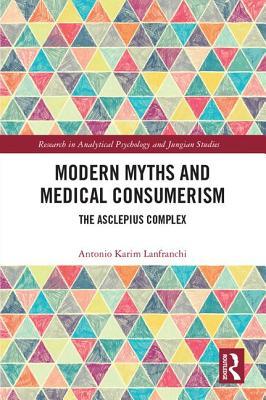
Modern myths and medical consumerism is concerned with the loss of a sense of limit in technological medicine today, and the way in which the denial of death leads to an uncontrollable, consumeristic multiplication of needs.
Patient consumerism has been gaining ground for decades, with a giant boost from the internet. Today, much of the information that doctors gain during medical school and residency patient satisfaction: history, myths, and misperc.
Modern medical myths (healthandage) read about the latest trends and advancments in reading eyeglasses. We talk of old wives tales, but many of the health-related ones persist today - along with some new ones.
15 dec 2015 a december report from mckinsey and company called debunking common myths about healthcare consumerism states, five different.
In studies of how drug advertising influences doctors' behaviour, little attention is given to visual and linguistic imagery. The authors argue that myth is often deployed in drug adverts to depict exaggerated therapeutic efficacy and that doctors should be aware of this although the influence of research on medical practice has become a key concern, the influence of pharmaceutical advertising.
Direct-to-consumer advertising of pharmaceuticals, health newsletters from leading hospitals and medical schools, and, most importantly, the near-ubiquity of the internet have made it easy for consumers to obtain information about their medical conditions and possible treatments.
Consumerism is an evil ideology that encourages the acquisition of materials goods and services in ever-increasing amounts. In botswana, for instance, since diamonds were discovered in 1966, the country’s relatively strong economy has created a new breed of consumer�.
Home blog articles healthcare trends consumerism and modern healthcare at abcs rcm, we are aware of some new realities that surround digital consumerism and healthcare. One of these new realities is that if patients want to visit a healthcare specialist, they usually need to go through a primary care physician.
The idea of internet addiction is the latest in a long litany of ailments associated with modern life—in the 19th century, a medical doctor named george beard said americans suffered from.
When it comes to actually going through with said pegging, this is the biggest deterrent.
Monumental myths of the modern medical mafia and mainstream media and the multitude of lying liars that manufactured them book.
An outgrowth of modern capitalism, and especially modern media and marketing. Typically, these historical accounts chart the rise of modern consumerism to the early 20th or late 19th century.
Page 2 of 3: page 2 page 1 page 2 page 3 myth: fingernails and hair continue to grow after death.
Modern myths and medical consumerism is concerned with the loss of a sense of limit in technological medicine today, and the way in which.
A culture in which the urge to consume dominates the psychology of citizens is a culture in which people will do most anything to acquire the means to consume -- working slavish hours, behaving rapaciously in their business pursuits, and even bending the rules in order to maximize their earnings.
According to her research, katharine park said, the female body really lay at the heart of the development of autopsy and dissection as medical practices. ” and with that, she is overturning a long-held myth that human dissection was prohibited by the church.
Homeopathy is based on a 300-year-old mistake and magnetic therapy is simply fraudulent. As for oxygen-fortified drinks christopher wanjek debunks some popular medical myths.
It may be true that the ‘ethical consumer’ is a myth, but consumers are influenced nevertheless by their social concerns, in the same way that they are influenced by other aspects of the consumption landscape: price, branding, taste, positioning and the context within which consumption occurs.
In our latest episode of security nation, we spoke with nina alli, executive director of the biohacking village, to discuss cybersecurity in the healthcare industry, from the role of informed medical consumerism to the influence of citizen science on patient advocacy and care.
Post Your Comments: