Download Sustainable Intensification in Smallholder Agriculture: An Integrated Systems Research Approach - Ingrid Oborn | PDF
Related searches:
Sustainable intensification (si) has recently emerged as a key concept for agricultural development, recognising that yields must increase to feed a growing world population, but it must be achieved without damage to the environment, on finite land resources and while preserving social and natural capital. It also recognises that all initiatives must cope with the challenges of climate change.
'sustainable intensification' aims to produce more food, fibre and fodder with fewer resources – for example, by increasing yields per unit of land, water or fertiliser. The concept has been widely adopted by mainstream development actors, but has been critiqued by some who are concerned that it adds 'a bit of sustainability' to systems that.
Wri report emphasizes productivity and technology for a sustainable agricultural future.
Evidence for sustainable intensification comes from those farms that have enhanced both food production and environmental quality since the baseline.
The goal of sustainable intensification is to make better use of human and natural resources such as land, water, biodiversity, knowledge, and technology (pretty 2018). Efforts to develop new synergies among agriculture and its social-natural ecosystems are underway.
Growing the service economy for sustainable wheat intensification in the eastern indo-gangetic plains: lessons from custom hiring services for zero-tillage.
By definition, achieving this challenge also means achieving the sustainable intensification (si) of agriculture, whereby more food is produced from the same area of land (or water), with reduced or reversed negative environmental impacts accompanied by a range of positive societal and environmental co-benefits.
Sustainable intensification offers an approach to evaluate and balance the environmental, economic, and social objectives of agriculture, sustainably increasing the value of agriculture outputs relative to inputs by increasing efficiencies throughout the food system.
Sustainable intensification in agriculture: premises and policies.
Visit howstuffworks to read some great articles on sustainable technologies. Advertisement sustainable technologies work to reduce waste while maintaining efficiency.
Sustainable intensification of agriculture: opportunities and challenges for food security and agrarian adaptation to environmental change in bangladesh� a dissertation submitted in partial fulfillment� of the requirements for the degree of� doctor of philosophy in environmental dynamics� by� aaron michael shew� middle tennessee state.
Oct 27, 2017 african and european agriculture share the common challenge of moving towards more sustainable ways of agricultural production.
Sustainable intensification of agriculture aims to produce more with less: to increase harvests without using more resources. The concept has been seen as key to achieving food security in africa – but in practice smallholders face numerous challenges in adopting this approach.
Apr 20, 2014 in june 2014, the rise foundation launched its review on the sustainable intensification of european agriculture.
Continuing environmental degradation amidst economic growth and population increase has underscored the desirability of pursuing sustainable intensification in agriculture. In theory, it would increase the volume of agricultural production without further degrading the natural environment or compromising the food security of the world’s.
In practice the sustainable intensification of farming involves simultaneously increasing farm output and competitiveness, whilst protecting the countryside and enhancing the environment.
Recent initiatives by the united states agency for international development and the united nations suggest “sustainable intensification” as the most appropriate means to use land in order to increase food supplies while protecting biodiversity and ecosystem processes.
It discusses in detail the last component, arguing that more food should be produced using sustainable intensification (si) strategies, and explores the rationale behind, and meaning of, this term. It also investigates how si may interact with other food policy agendas, in particular, land use and biodiversity, animal welfare and human nutrition.
May 17, 2017 sustainability is crucial for the stability of the agricultural sector moving forwards.
The montpellier panel is a panel of international experts from the fields of agriculture, sustainable development, trade, policy, and global development chaired.
Sustainable intensification practices can increase smallholder yields, which, in theory, reduces demand to clear additional land. Practices include intercropping, ecosystem-based pest management, and equal resources for women.
Jun 20, 2018 sustainable intensification (si) has emerged in recent years as a powerful new conceptualisation of agricultural sustainability and has been.
The sustainable intensification of agricultural practices is a team effort and only possible if socio-economic means facilitate simple and practical implementation linking progressive growers to value chain partners, and up to consumers, in order to reward the best efforts.
Sustainable intensification using context-specific, integrated approaches, cimmyt studies and works with farmers to test and promote diverse agricultural practices. Minimal soil disturbance, permanent soil cover and crop rotation techniques not only boost yields and protect soil quality and water availability — they also help farmers build.
This suggests that sustainable intensification will very often involve more complex mixes of domesti-cated plant and animal species and associated man-agement techniques, requiring greater skills and knowledge by farmers. To increase production effi-ciently and sustainably, farmers need to understand.
The sustainable intensification indicator manual provides guidance on how scientists working in research for development projects can estimate the indicators and metrics listed in the guide for sustainable intensification assessment. This manual provides the most commonly used methods to estimate an indicator or metric and,.
Sustainable intensification: increasing productivity in african food and agricultural systems (international journal agricultural sustainability) [pretty, jules, toulmin, camilla, williams, stella] on amazon.
Jul 1, 2019 zimbabwe has been experiencing widespread land degradation, soil erosion, increasing aridity and temperatures that, coupled with population.
Sustainable intensification has become a priority for the united nations. Sustainable intensification differs from prior intensification methods by specifically placing importance on broader environmental outcomes. By the year 2018; it was predicted in 100 nations a combined total of 163 million farms used sustainable intensification.
The ‘sustainable intensification’ (si) approach and ‘climate-smart agriculture’ (csa) are highly complementary. Si is an essential means of adapting to climate change, also resulting in lower emissions per unit of output.
Nov 22, 2018 this paper explores the sustainable intensification possibilities facing smallholder farmers in ethiopia.
The term 'sustainable intensification'the desire for agriculture to produce more food without environmental harm, or even positive contributions to natural and social capital, has been reflected in calls for a wide range of different types of more sustainable agriculture: for a 'doubly green revolution' (conway, 1997), for 'alternative.
Sustainable intensification has recently been developed and adopted as a key concept and driver for research and policy in sustainable agriculture. It includes ecological, economic and social dimensions, where food and nutrition security, gender and equity are crucial components.
Lessons learnt about the mechanisms of agricultural intensification helped understanding the constraints faced by external interventions promoting sustainable land management practices. When negotiated by local communities for their own interest, roads may provide livelihood-enhancing opportunities through access to external resources, rather.
Feb 19, 2019 abstract sustainable intensification (si) is a global challenge, aiming to increase food production whilst conserving biodiversity and ecosystem.
Sustainable intensification and the african smallholder farmer b 1 vanlauwe1, d coyne1, j gockowski2, s hauser3, j huising3, c masso� g nziguheba1, m schut4 and p van asten5 sub-saharan africa needs to produce more food, feed, and fiber to support its growing population and intensification of smallholder agriculture is a crucial component.
The sustainable intensification assessment framework provides a set of indicators organized into five domains considered as critical for sustainability, namely productivity, economic, environment, human condition and social domains.
Sustainable intensification is an approach using innovations to increase productivity on existing agricultural land with positive environmental and social impacts. Both words, “sustainable” and “intensification,” carry equal weight.
Sustainable agricultural intensification in an era of rural transformation in africa,.
Land use land cover (lulc) change analyses and landscape quantification of agricultural intensification patterns and their underlying landscape processes are assessed for evidence of sustainable practices. Additionally, we elucidate the landscape patterns of the si of agriculture associated with malawi's agricultural extension delivery system.
Sustainable intensification is the broad term for an approach to agriculture that increases food production from existing farmland without increasing impact on the environment. It’s a complex subject, and one on which there remains much disagreement on meaning, methodology and motivation.
These bold designs push the envelope in terms of aesthetics and emissions reduction. An award-winning team of journalists, designers, and videographers who tell brand stories through fast company's distinctive lens what’s next for hardware,.
Mar 7, 2016 matthias halwart, senior strategic programmer officer of the fao sustainable agriculture programme, explains the importance of sustainable.
Sustainable intensification innovation lab-funded project can predict the regions of covid-19 outbreaks. The feed the future innovation lab for collaborative research on sustainable intensification, or siil, is funded by the united states agency for international development and hosted at kansas state university.
Sustainable agricultural intensification research and learning in africa (sairla) is a five-year programme (2015–2020) seeking to generate new evidence and design tools to enable governments, investors and other key actors to deliver more effective policies and investments in sustainable agricultural intensification.
Sustainable intensification uses biological and ecological principles to improve the farming system and reduce the environmental problems.
Sustainable intensification is a process designed to achieve higher agricultural yields whilst simultaneously reducing the negative impact of farming on the environment.
Sustainable intensification (si) is defined as a process or system where agricultural yields are increased without adverse environmental impact and without the conversion of additional non-agricultural land. The concept does not articulate or privilege any particular vision or method of agricultural production.
Sustainable intensification innovation lab kansas state university 108 waters hall 1603 old claflin place manhattan, ks 66506� 785-532-7072 siil@k-state.
The sustainable intensification research platform (sip) is now completed. Outputs from the project are available via these pages pages. Sip was a multi-partner research programme comprising farmers, industry experts, academia, environmental organisations, policymakers and other stakeholders.
To understand whether and how sustainable intensification can be achieved, we chose two situations that aim at different target yields, that is, current yield level (ya), and a higher yield level (ye). We considered long‐term soil n dynamics and currently available technologies to estimate the optimal feasible nue and n surplus in the long term.
During the final westat site visit, project assist staff indicated that the fall river program had been successful in building a collaborative network that will remain as an important community resource.
Integrated pest management (ipm) is a leading complement and alternative to synthetic pesticides and a form of sustainable intensification with particular importance for tropical smallholders.
Nov 19, 2020 this is a unique approach for sustainable pi in which the effects of intensification can be observed at the phenomena, equipment, and flowsheets.
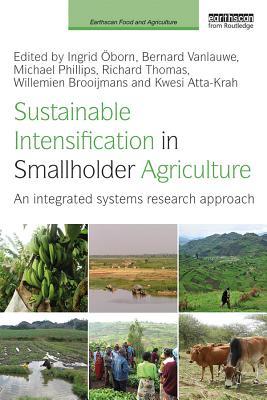
Sustainable intensification in smallholder agriculture: an integrated systems research approach (earthscan food and agriculture) [oborn, ingrid, vanlauwe,.
Jul 25, 2014 the concept of sustainable intensification has come into prominence in the context of global food security.
The next economic revolution is already underway - and it is driven by sustainability. Exclusive insight from carolina minio-paluello, global head of sales and solutions for lombard odier investment managers, as she describes what the susta.
Sustainable intensification is a term now much used in discussions around the future of agriculture and food security.
Sustainable intensification in agriculture conference scheduled on may 17-18, 2021 in may 2021 in paris is for the researchers, scientists, scholars, engineers, academic, scientific and university practitioners to present research activities that might want to attend events, meetings, seminars, congresses, workshops, summit, and symposiums.
The goal of this concept is to build and improve urban and suburban areas with as little impact on the environment as possible.
Sustainable intensification practices (sips) involve a process to produce high yields for existing land without affecting the environment. The significance and relevance of sips in a pakistani context demands an investigation. Hence, this study takes the initiative to investigate the determinants regarding the adoption of these practices.
Feb 14, 2020 this leads to soil compaction which reduces crop yields and is damaging to the environment and to natural life in the soil.
Sustainable intensification looks at whole landscapes, territories and ecosystems to optimize resource utilization and management. Farmers must produce more from the same area of land and use fewer inputs while producing greater yields.
Fsc is engaged in conversations related to this complicated subject, working with stakeholders to answer.
The sustainable intensification of agriculture (sia), “a process or system where agricultural yields are increased without adverse environmental impact and without the conversion of additional non-agricultural land” (pretty and bharucha 2014), has emerged as an important strategic intervention for climate adaptation, agrarian development, and rural food security.
Mar 7, 2018 keywords: agroecosystem management, sustainable intensification of agriculture� social-ecological systems, long-term research network.
Climate change and environmental degradation are major threats to sustainable agricultural development in southern africa. Thus, the concept of sustainable intensification (si) has become an important topic among researchers and policymakers in the region over the last three decades. Si involves getting more output from less input using practices such as agroforestry, organic fertilizer.
Intensification, within enabling environments created by processes of socio-economic intensification. What is new in this report is the way in which they are combined as a framework to find appropriate solutions to africa’s food and nutrition crisis. Recommendations this report presents examples of sustainable intensification in action.
Apr 10, 2019 this is the goal of sustainable intensification: to increase food production in a given area of land without further adverse environmental impacts.
This decision is a turning point to foster the dissemination of conservation agriculture and sustainable intensification practices to restore and preserve agricultural soils in cambodia, advancing in farm sustainability and contributing to climate change mitigation and adaptation.
Sustainable intensification is a broad concept that does not prescribe or prioritize a specific set of interventions (mbow et al 2019).
Post Your Comments: