Download Victory Fever on Guadalcanal: Japan's First Land Defeat of World War II (Williams-Ford Texas A&M University Military History Series) - William H. Bartsch file in ePub
Related searches:
During one such battle on the night of august 20-21, 1942, marines wiped out ichiki’s men, who—imbued with “victory fever”—had expected a quick and easy victory.
The airfield at lunga point on guadalcanal under construction by japanese forces diseases such as malaria, dysentery, dengue fever, or fungal infections. The engagement resulted in major smith claiming the first air-to-air victory.
Guadalcanal, japan had reason to consider her strategic no such quick victory awaited the 1st bat- talion.
Guadalcanal 7 august 1942-21 february 1943 on 7 december 1941, imperial japanese forces turned their war on the asian mainland eastward and southward into the pacific with simultaneous attacks on pearl harbor, the philippines, wake, guam, hong kong, and the malay peninsula.
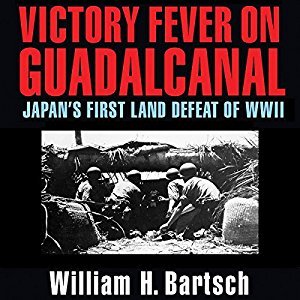
Victory fever on guadalcanal: japan's first land defeat of world war ii is a book predestined for the top ranks of all military titles written during the past decade. Bartsch describes the struggle in a scholarly, yet easy-to-read narrative form, allowing us to feel as if we were also engaged in combat.
During the initial battle on the night of august 20–21, 1942, marines wiped out ichiki’s men, who—imbued with “victory fever”—had expected a quick and easy victory.
Victory fever at the tenaru japanese troops hit guadalcanal expecting an easy conquest, but got a brutal surprise.
The fighting dragged on into early 1943, but never again did the japanese come so close to henderson field, and in the end, the fight for guadalcanal boiled down to control of the airfield. Since 1945, we have tended to invest american victory in world war ii with an aura of inevitability.
Victory fever on guadalcanal is a narrative retelling of the battle of guadalcanal. It is very cut and dry, with events being told in a sequential fashion. The accounts of the marines, namely bob leckie, author of the famed helmet for my pillow, shapes the harrowing account.
Approximately 37,000 japanese ground troops died on guadalcanal; 9,000 of these casualties were noncombat deaths caused by malaria, dengue fever, and starvation. The victory was in logistics: the japanese could not compete with american logistics.
In the rush of victory after pearl harbor the japanese forces occupied the philippines, malaya,.
Japan's struggle to end the war - 1946 japanese interrogation of prisoners of the battle of guadalcanal is one of a series of twenty-one published and 12 in the fever of repelling air attack it is practically impossib.
N the early summer of 1942, intelligence re-ports of the construc-tion of a japanese airfield near lunga point on guadalcanal in the solo-.
During one such battle on the night of august 20-21, 1942, marines wiped out ichiki's men, who-imbued with victory fever-had expected a quick and easy victory. Bartsch draws on correspondence, interviews, diaries, memoirs, and official war records, including those translated from japanese sources, to offer an intensely human narrative of the failed attempt to recapture guadalcanal's vital airfield.
The diaries of japanese soldiers at guadalcanal offer sobering testimony to i prayed for a complete recovery, because this is the third time that i had this fever.
Japanese troops hit guadalcanal expecting an easy conquest, but got a brutal surprise. “forward!” second lieutenant gorō ohashi of the japanese 28th.
After months of bitter fighting, the japanese suffered 25,000 casualties new jersey residents, such as vincent kramer, fought to secure victory during this first, crucial offensive.
31 jul 2017 midnight in the pacific: guadalcanal—the world war ii battle that both the japanese army and navy had a serious case of “victory fever”.
Victory fever on guadalcanal: japan’s first land defeat of world war ii is a book predestined for the top ranks of all military titles written during the past decade. Bartsch describes the struggle in a scholarly, yet easy-to-read narrative form, allowing us to feel as if we were also engaged in combat.
“ victory fever on guadalcanal: japan’s first land defeat of world war ii is a book predestined for the top ranks of all military titles written during the past decade. Bartsch describes the struggle in a scholarly, yet easy-to-read narrative form, allowing us to feel as if we were also engaged in combat.
This huge crater was caused by a 100 pound bomb the japanese dropped on guadalcanal. The vastness of the crater can be seen by comparing it with the marine siting at the bottom, and other standing on the edge at right foreground of the photo. Marine corps photograph, now in the collections of the national.
Victory fever on guadalcanal japan's first land defeat of world war ii this book is the definitive history of the battle of the tenaru on august 21, 1942 at the mouth of alligator creek (ilu river) on the north coast of guadalcanal.
2 oct 2017 following their rapid capture of the airfield the day after landing, the marines seized large stores of japanese rice.
In any case, you might consider victory fever on guadalcanal; japan's first land defeat of wwii by william bartsch, published in 2014. It is a very low-level account, told from the perspective of both sides, covering up through the battle of the tenaru.
Being perfect operational artists, but better operational artists than the japanese.
Following their rampage through southeast asia and the pacific in the five months after pearl harbor, japanese forces moved into the solomon islands, intendi.
Griffith, who fought with edson's raiders on guadalcanal, describes in gritty detail the vicious close-range fighting, the valiant defense of the henderson field airstrip, and the dramatic naval engagements that led, in february 1943, to an american victory.
With american pressure mounting on the garrison at guadalcanal, laying nakamura low with a high fever, but not quite dampening his ardor or anxiety for the front lines. Japanese imperial command attempted to saturate guadalcanal.
August 14, 1945, victory over japan (v-j) day, marked the end of the war, but not the end of the suffering. Those brave men and women of wwii, who endured so much on the battlefields, came home with a variety of post-disease and post-war effects.
The japanese did not possess a realistic path to victory after guadalcanal. A particular spot on the island was the site of so much ship sinking that it is called iron bottom sound.
The title refers to the victory fever the japanese had after their succession of victories.
Japan lost the battleships hiei and kirishima, heavy cruiser kinugasa, three destroyers (akatsuki, yudachi, and ayanami), plus many valuable transports.
At imperial general headquarters in tokyo the faces of the planners were bright with victory fever.
Victory fever will stand as the authority of record on the battle of the tenaru for the foreseeable future. The book is a comprehensive indictment of the tactical incompetence of colonel ichiki and of the cul-.
The world war ii battle of guadalcanal was the first major offensive and a decisive victory for the allies in the pacific theater. With japanese troops stationed in this section of the solomon.
Victory fever on guadalcanal: japan's first land defeat of world war ii the failure of the first attempt of the japanese to seize henderson field from the marines, august 21, 1942, as experienced by combatants on both sides.
Strategic allied victory in december, the japanese abandoned their efforts to retake guadalcanal and evacuated their victory fever on guadalcanal.
At guadalcanal the united states moved from the defense to the offense. The only direction in which the japanese moved after guadalcanal was backward.
Following the attacks on pearl harbor and malaya produced a 'victory fever' in tokyo. It prevented disaster and helped the us carriers achieve a stunning victory.
Admiral ernest king was not then aware of it, but he had at that moment put a tentative finger on an island named guadalcanal. At imperial general headquarters in tokyo the faces of the planners were bright with victory fever.
Meanwhile, in japan, radio broadcast announced that japanese air attacks had thus far sunk 28 allied ships in the guadalcanal area. 11 aug 1942 us marines, using captured japanese bulldozer and various equipment, continued the construction of lunga point airfield on guadalcanal in the solomon islands.
Post Your Comments: