Download Resistance and Change in the International Law on Foreign Investment - Muthucumaraswamy Sornarajah | PDF
Related searches:
Resistance and Change in the International Law on Foreign
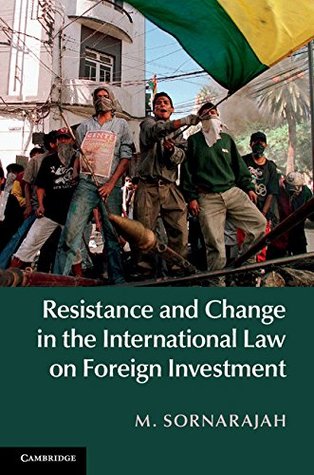
Resistance and Change in the International Law on Foreign Investment
Change Resistance: Embrace the change Leadership and management
Autism and the Resistance to Change The Art of Autism
Politics and the Resistance to Change
Centuries of Navigating Resistance and Change: Exploring the
The Neuroscience of Resistance and How to Overcome It! - Mindful
The Tug of War Between Change and Resistance - Educational
Resistance to Change: Reasons, Types and How to Overcome - Toppr
Resistance To Change Is Normal. Reduce The Impact.
Resistance to Change: The Rest of the Story - JSTOR
Readiness for change, change beliefs and resistance to change of
7 Strategies for Overcoming Resistance to Change in the Workplace
12 Reasons Why Employees Resist Change in the Workplace
Overcome The 5 Main Reasons People Resist Change
Free Fall and Air Resistance - Physics
Summary of the Six Change Approaches by Kotter. Abstract
Overcoming Employee Resistance to Change in the Workplace
Resistance to Change: The Rest of the Story Academy of
Managing Resistance To Change In The Workplace
Resistance to Change: Categories, Reasons and Signs
Handling Resistance to Technological Change in the Workforce
Mitigating Resistance to Change in the Workplace
Current and resistance
Examining the Relationship between Employee Resistance to
Analysis of the Factors Affecting Resistance to Changes in - SciELO
My Biggest Lesson About Change And Resistance by Christiaan
Resistance to Change and Conflict of Interest: A Case Study
Individual and Organizational Sources of Resistance to Change
Voltage, Current, Resistance, and Ohm's Law - learn.sparkfun.com
(PDF) Resistance to organizational change: The role of
RETHINKING RESISTANCE AND RECOGNIZING AMBIVALENCE: A
The Cycle of Change: Psychological Self-Help
Emf and Internal Resistance
The '3.5% rule': How a small minority can change the world
Resistance, Capacitance, Voltage, And Time Calculator
Indoor trainers: what is electromagnetic resistance and can
The Level of Resistance to Change Versus Results from the
Change Management - The 4 Stages of Change Management
The emasculation of expropriation (Chapter 4) - Resistance
Resistivity and Resistance – University Physics Volume 2
Change recipients’ resistance and salience to organizational
Schlesinger concluded that there are four common situations in which people’s resistance to change germinates and grows: self-interest; misunderstanding and lack of trust; different evaluations; low tolerance for change.
The country of mongolia has an ancient culture with a 28-year-old democracy that emerged out of communism. Over the course of several centuries, the mongolian people have adapted to severe climates and brutal occupations but have managed to preserve cultural practices and the mongolian way of life. Women leaders have made significant historical and contemporary contributions in mongolia, from.
But with the proper communication plans and protocol in place, resistance can be minimized.
Resistance is a function of the amount of disruption a change creates for an individual. It’s a way for people to protect themselves against changes in their job tasks, work behaviors, performance measures, power and/or status.
The change in velocity terminates as a result of the balance of forces. The velocity at which this happens is called the terminal velocity. In situations in which there is air resistance, more massive objects fall faster than less massive objects.
The causes of employee resistance to change: the habbits of employees. The organizational changes that require personal and professional habits change will be faced with resistance, as any change in personal habits requires effort and, therefore, out of personal confort zone; “habits are hard-wired into the basal ganglia part of the brain.
Pure resistance does not change with frequency, and typically the only time only resistance is considered is with dc (direct current -- not changing) electricity. Reactance, however, is a measure of the type of opposition to ac electricity due to capacitance or inductance.
The passive person who doesn’t agree with change, ignores it, or does nothing needs to be change-inspired before he becomes part of a group resistance. The forms of resistance to change can be many; however, if they are quickly identified and controlled using good change management skills, you’ll be successful. Stop resistance to change by being open from the very beginning about the change and make sure everyone understands the need for the change.
Resistance to change is the unwillingness to adapt to altered circumstances. Employees may realize they don't like or want a change and resist publicly, and that can be very disruptive.
All too often when executives encounter resistance to change, they “explain” it by quoting the cliche that “people resist change” and never look further.
Resistance to change is also precipitated when people feel they will be negatively affected by its consequences. This may be because of a perception that their earnings or career potential will be harmed or that the rewards of the change are not worth the effort required.
Resistance to organizational change: the effect on job satisfaction and turnover intention and the moderating effect of emotion regulation strategies.
Resistance to change is the action taken by individuals and groups when they perceive that a change that is occurring as a threat to them. The threat need not be real or large for resistance to occur. In its usual description it refers to change within organizations, although it also is found elsewhere in other forms.
Resistance sees resistance as an opportunity for learning, understanding and improving the change process. Ford and ford (2009a) approach resistance as a sense-making process through which change agents and change recipients can learn, grow and improve.
Hence, all over the world, there is resistance to changes to new or improved practices. Resistence may be mild or may take the form of violent refusal depending on the nature and type of change. This inertia can constitute a major obstacle to improvement as we have observed in the matters of family planning and new methods of agriculture during early period of independence in india.
Resistance to change can slow implementation, degrade benefits and in some cases cripple the entire project. In fact, resistance to change was cited as the number two obstacle in the 2007 study. Prosci's research and methodology suggest that there are steps that can be taken to proactively manage resistance, before it significantly impacts a project.
The change resistance sign is your employees avoiding new assignments, as they prefer remaining in the comfort zone of their previous assignments, rather than exploring new assignments where they only see the wrongs and not the rights. In fact, due to the change, many employees will show physical symptoms of stress as well.
In each case, civil resistance by ordinary members of the public trumped the political elite to achieve radical change. There are, of course, many ethical reasons to use nonviolent strategies.
Famous examples of resistance to change published on january 9, 2015 january 9, 2015 • 31 likes • 3 comments. Report this post; sherry heyl follow sales and marketing manager for small.
Change is basically a variation in pre- existing methods, customs, and conventions.
Resistance also depends on temperature, usually increasing as the temperature increases. For reasonably small changes in temperature, the change in resistivity, and therefore the change in resistance, is proportional to the temperature change.
Resistance to social change through perception management rises when the truth is exposed, when there is fatigue with ideas that attack but do not offer suitable alternatives, or when there is anger and resentment that builds from having been manipulated. In summary, there are many ways that people develop resistance to social change.
Resistance to change as there is always some loss as a result of any change, not only for the losers of the change but also for the winners, people naturally resist it kanter (1985). The loss may be a loss of routines, comfort, past, traditions and/or relationships (kanter, 1985).
Prevailing views of resistance to change tell a one-sided story that favors change agents by proposing that resistance is an irrational and dysfunctional reaction.
Top reasons for resistance to change although change management decisions are normally made at the c-level, it’s still very important to have the rest of the employees bought in to the change. Having employees who are opposed to what is going to be changing from the start is a major setback and one that needs to be dealt with carefully in order to be successful with the change management.
It is difficult for organizations to avoid change, as new ideas promote growth for them and their.
Individual and organizational sources of resistance to change. Individual sources of resistance towards a change exist in the basic human tenets or characteristics and are influenced by the differences in perception, personal background, needs or personality-related differences. It is important to understand those triggering factors or issues which refrain individuals from endorsing change or extending their support and cooperation towards any change initiatives at an organizational level.
30 dec 2019 in rapidly changing and competitive markets, organizations must be agile and adaptable to thrive.
Resistance to change is a huge factor for companies wanting to drive innovation, change, and get an upper hand on their competition. Resistance comes from many variables, but the worst ones come from the individual industry “norms” or culture, tenure, management, and leadership.
Resistance is a natural response to change and can be destructive; but resistance can also be constructive and improve change outcomes. This in-depth research study adds to existing research in the field by diving deeper into particular facets of resistance management.
Keywords: resistance to change; change model; change agent; communication; behavior.
Managers resisted a change when they feared a loss of control or authority in the future state. This loss of control and authority created an environment where managers felt threatened in their status, position and autonomy. Lines of business will lose complete control and independence over financials.
Furthermore, the change in radius alters resistance to the fourth power of the change in radius. For example, a 2-fold increase in radius decreases resistance by 16-fold! therefore, vessel resistance is exquisitely sensitive to changes in radius.
Some resist change as a political strategy to “prove” that the decision is wrong. They may also resist to show that the person leading the change is not up to the task. Others may resist because they will lose some power in the organizational. In these instances, these individuals are committed to seeing the change effort fail.
Purpose, the rtc was designed to assess individuals' tendencies to resist or avoid making changes, to devalue change generally, and to find change aversive.
Job loss is a major reason that employees resist change in the workplace. In any business, there are constantly going to be things moving and changing, whether it is due to the need for more efficiency, better turnaround times, or the need for the employees to work smarter.
What is resistance to change? resistance to change is just what it sounds like. Employee resistance is probably the biggest obstacle to change initiatives. Staff resistance is very common, but that doesn’t make it easy to deal with.
“resistance developed almost immediately after the change occurred. Marked expressions of aggression against management occurred, such as conflict with the methods engineer,hostility toward.
5 nov 2019 top causes of resistance to change within your organization 1) mistrust and lack of confidence 2) emotional responses 3) fear of failure.
Resistance is a material's tendency to resist the flow of charge (current). So, when we talk about these values, we're really describing the movement of charge, and thus, the behavior of electrons. A circuit is a closed loop that allows charge to move from one place to another.
The first step in the emergence of resistance is a genetic change in a bacterium.
In fact, it is important to understand that the barriers that make it difficult to implement change are usually the reasons behind the resistance to change. That change is a necessary part of life means businesses must embrace it without excuse.
23 may 2011 change management - top 12 reasons why people resist change - reasons for resistance to change.
Dealing with resistance in change management when people hear change management in the workplace, their initial reaction is anxiety, reluctance and fear mixed with some curiosity. Change management is not something that should be taken lightly, by either management or the people involved.
Resistance to change not always reflect opposition, or mean inertia. Even with a sincere commitment to change, many apply their productive energy to competing commitments. Employees who have both talent and skills to progress with the change; hard-working employees who are highly committed to the organisation; and those who support the change and conviction and yet, inexplicably, do nothing.
For starters, a comprehensive literature review reveals the top six sources that are significant contributors to resistance to change: reactive mindset, resignation; deep rooted values and emotional loyalty; misaligned interests; too much fast and complex change; communication barriers; change values opposite to organizational values; note what is not listed.
Some projects bring about small modifications to the status quo, and others introduce a large-scale transformation. No matter the size or scale of the project, people resist change. Overcoming this resistance to change is a top challenge faced by organizations and project sponsors today.
Resistance can delay or slow down the change process, obstruct its implementation and increase its cost.
Change can be understood as a six-step, repeating process with two central features of resistance and resiliency. Knowledge of the change cycle makes it easier to both lead and follow change. Use the picture above to understand how the cycle of change works.
This study aimed to find out how readiness for change, change beliefs and resistance to change exist between extension personnel in the new valley.
Do change management right the first time expect resistance to change address resistance formally identify the root causes of resistance engage the “ right”.
Previous literature explains that resistance to change results from cognitive and psychological processes, social and power relationships, and organizational structural inertia.
The belief in inherent resistance to change is the fundamental flaw of these change efforts. If belief in resistance to change is so popular, and so widely accepted, how can we assert that it is a bankrupt mental model? the purpose of this article is to trace the ascendanceofthismentalmodel.
Resistance is the active or passive opposition to change and the management of change. Individuals and groups can also express or feel degrees of opposition. You must keep in mind that resistance is dynamic and changes depending on the specific situation.
27 sep 2018 5 things anyone involved in a strategic initiative needs to know about resistance to change based on the principles of the aim change.
After understanding the causes/antecedents of employees' resistance to change in the literature, we have got an opportunity to add another potential but major.
Change resistance is the tendency for something to resist change even when a surprisingly large amount of force is applied.
At the end of the day, all sources of resistance to change need to be acknowledged and people’s emotions validated. It’s far better to anticipate objections than to spend your time putting out fires, and knowing how to overcome resistance to change is a vital part of any change management plan. The resistance to organizational change is rarely irrational. Employees resist change efforts from a perspective that makes perfect sense to them.
Resistance to change: “we’ve always done it that way” it’s no wonder patients find it hard to find the courage to make necessary changes.
Resistance to change provides a degree of stability and predictability to behavior, as it does not allow immediate change. If there was no resistance to change the organization will take on characteristics of chaotic randomness. There may be reasons for resistance to change for analytical purpose, lets us categories the causes into the following.
23 sep 2020 understand why your employees are resistant to change. It is completely normal employing strategies to decrease employee resistance.
Resistance to change manifests itself in many ways, from foot-dragging and inertia to petty sabotage to outright rebellions. The best tool for leaders of change is to understand the predictable,.
Managing resistance to change can be made easy by analyzing your key stakeholders sway and power.
Strain gauges operate on the resistance change of the gauge material with applied strain. The slight molecular structure deformation of a metallic wire causes a change in resistance of a metallic strain gauge. The concentration and mobility changes of minority charge carriers influence the resistance of a semiconductor strain gauge.
In psychology, the concept of resistance to change refers to people experiencing an emotional anxiety caused by the prospect of a transformation or change that is taking place. During the early years of psychology, resistance to individual change was simply analyzed as a motivational problem.
Department of management, monash university, melbourne, australia.
Resistance to change is a prevalent issue in nursing, with ongoing interventions needed to increase awareness and to support nurses on the journey to becoming change agents. The purpose of this article is to illustrate the foundations of change learned during nursing school, and their applicability as nursing students transition to the professional nurse role.
A context of resistance only gives that rebellious spirit room to grow and has given some people the impetus to question the nature of our society and wonder whether revolution — a true change.
Have little impact on the incidence of workforce resistance to changes in job workforce resistance, organisational change, linked employer-employee data.
3 jan 2020 no matter the size or scale of the project, people resist change. Overcoming this resistance to change is a top challenge faced by organizations.
Resistance left buried produces frustrated and disenchanted employees, turnover, and increased cost and delays.
Resistance and change in the international law on foreign investment - april 2015 skip to main content accessibility help we use cookies to distinguish you from other users and to provide you with a better experience on our websites.
The six (6) change approaches of kotter and schlesinger is a model to prevent, decrease or minimize resistance to change in organizations. According to kotter and schlesinger (1979), there are four reasons that certain people are resisting change:.
As successful change management is defined by the ability of people to move towards, and accept, the vision for change it is essential to support the process by focusing on the individual. When you are aware that someone has fear of change you can support them with effective change management planning.
While many people like to joke that the only constant in business is change, change has an interesting way of affecting people that can often result in resistance.
A culture of resistance to change developed with frustrations from the past during the change process, low tolerance for change, the difficulty of giving up on habits, the difficulty of learning new things, the disruption of well-known comforts, close-mindedness, old experiences, past performances and past mistakes can be counted as the causes of resistance to change, which can be ranked under the framework of commitment to the past.
Resistance is a state of mind reflecting unwillingness or unreceptiveness to change in the ways we think and behave. Resistance can be contrasted with readiness, which is a state of mind reflecting willingness or receptiveness to change.
The phrase “resistance to change” is discussed hand to hand along with the concept of change management. Resistance to change may be organizational or individual in nature. According to agócs, 1997, organizational resistance involves all the organizational behavioural patterns which impede or undermines change.
There are a lot of ways employee resistance negatively impacts plans for change. Not only does it have an impact on the proposed amendment itself, but it can also affect the whole company. Here are common barriers and obstacles that employee resistance can bring to any change management plan:.
9 apr 2018 resistance to change (rtc) is widely recognized as the main reason of failure, when it comes to change initiatives.
Resistance to change in strategic adaptation is potentially more of an issue because such a change requires a high level of organization change and is also more dependent on organization members to change. Conversely, resistance to change in strategic revision is less of an issue because such change requires a low level of organization change, and most organization members do not need to change.
Resistance to change can be either individual or organisational. Individual resistance comes from the people who are affected by the change and often arises from fear of the unknown or concerns about loss of status or perceived lack of skills to manage in the changed situation.
Post Your Comments: