Read online The Early History of the Ramakrishna Movement - Swami Prabhananda | ePub
Related searches:
The Early History of The Ramakrishna Movement - Exotic India Art
The Early History of the Ramakrishna Movement
The Early History of the Ramakrishna Movement – Advaita Ashrama
The Early History of the Ramakrishna Movement - Vedanta Press
A documentary on the brief history of Ramakrishna Mission Calcutta
The Early History of the Ramakrishna Movement: Swami
The Early History of the Ramakrishna Movement on Apple Books
The Early History of the Ramakrishna Movement eBook by Swami
Early History of the Ramakrishna Movement, The by Swami
Belur Math and The Headquarters of Ramakrishna Math and
The Story of Ramakrishna Paramahamsa’s Enlightenment - Isha
The Changing Approaches to the Study of Early Indian History
Full text of History Of The Ramakrishna Math And Mission
One House, Many Doors: The Legacy of Sri Ramakrishna
History of the Ramakrishna-Vivekananda Center of New York
(PDF) The Professor and the Paramahamsa: Martin Luther and
The Life of Ramakrishna by Romain Rolland
Sri Ramakrishna the Unknown Vedanta Society of Southern
Human rights in the Ramakrishna Math and Mission: ‘For
The Ramakrishna Mission – RKMRC
Vedanta for the West: The Ramakrishna Movement in the United
Kali’s Child: The Mystical and the Erotic in the Life and
The Hidden Reason Behind the Early Death of Swami Vivekananda
The Publications and Sales Department – RKM Institute of Culture
The Timeline and History of Yoga in America
Read Download Sri Ramakrishna The Great Master PDF – PDF Download
The emblem of the Ramakrishna Order – Vedanta Society Berkeley
Ramakrishna - Infogalactic: the planetary knowledge core
The spirituality of Rabindranath Tagore, Ramakrishna and
The Complete Works of Swami Vivekananda/Volume 6/Writings
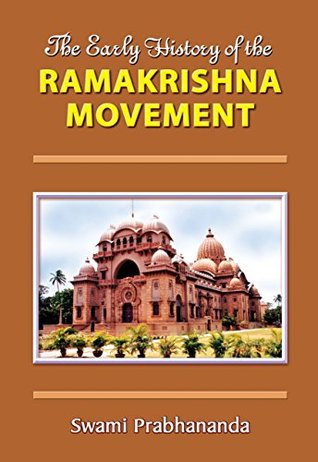
This humble work is an honest attempt to briefly study how sri ramakrishna's mission proceeded particularly during its early years towards fulfillment and in the process how the ramakrishna movement grew and developed in the early days. One charming feature of the book is the number of photos, illustrations and maps which explain the texts.
In the early forties (1942), he established the ramakrishna tapovanam in tiruparaithurai, tiruchi district. Since then, tapovanam has established several educational institutions in tamil nadu and propagates the ideals of ramakrishna and vivekananda through religious and social activities such as book publishing.
The present humble work is an honest attempt to briefly study how sri ramakrishna's mission proceeded particularly during its early years towards fulfillment.
The ramakrishna movement originated in india in the latter nineteenth century, based on the teachings of an indian saint and mystic named sri ramakrishna (1836–1886). The movement was brought to the united states by the bengali saint's disciple swami vivekananda (1863–1902), who represented hinduism at the 1893 chicago world parliament of religions.
During sri ramakrishna's stay at dakshineswar, rani rasmani first acted as his in the history of humanity there has never been another woman who looked.
Birth and childhood ramakrishna was born on 18 february 1836, in the village of kamarpukur, in the hooghly district of west bengal, into a very poor, pious, and orthodox brahmin family. Kamarpukur was untouched by the glamour of the city and contained rice fields, tall palms, royal banyans, a few lakes, and two cremation grounds.
Upon his return to india, swami vivekananda founded the ramakrishna order of india in the name of his teacher, sri ramakrishna, who is regarded as the prophet of harmony of religions. The order is the pre-eminent religious organization of modern india. More than 1000 monks of the order serve throughout the world.
A few other buildings associated with the early history of ramakrishna math are: the old shrine where worship to sri ramakrishna was conducted for more than.
This book is the most comprehensive, authentic and critical estimate of the life, sadhana, and teachings of sri ramakrishna. It is an english translation of sri sri ramakrishna lila-prasanga written in bengali by swami saradananda, a direct disciple of sri ramakrishna and who is deemed an authority both as a philosopher and as a biographer.
Sri ramakrishna was born on 17 february 1836, in the village of kamarpukur, in the hooghly district of west bengal, india, into a very poor, pious, and orthodox bengali brahmin family. Kamarpukur was untouched by the glamour of the city and contained rice fields, tall palms, royal banyans, a few lakes, and two cremation grounds.
Some of the early swamis were swami ranganathananda, former president of the ramakrishna order from india, swami bhashyananda, minister of the chicago vedanta society, and swami nihshreyasananda from rhodesia. Swami swahananda, minister of the vedanta society of southern california, began visiting the dallas-fort worth area in the mid-1980s.
The early history of the ramakrishna movement [swami prabhananda] on amazon.
With admirable clarity and remarkable brevity, jackson surveys the history of the movement and raises important issues -- the journal of american history� an important history of the ramakrishna movement, the very first and in many ways the most important asian religious group to appear in the united states.
13 jun 2017 a documentary on the brief history of ramakrishna mission calcutta students' home� part ifull documentary 2018.
Even a monthly named 'viveka margamu' was published in small numbers and circulated among the youth members of the samithi in the early 1970s.
Vivekananda, one of history’s greatest leaders and social activists, built a series of homes across the country as a tribute to his mentor, known as the ramakrishna.
His life was a testament to truth, universality, love and purity. The story of ramakrishna is a story of religion in practice��� he was a living embodiment of godliness.
Ramakrishna was born as gadadhar into the vaishnava-leaning pious brahmin family of khudiram chattopadhyay in 1836 in the village of kamarpukur, now in west bengal, india.
Swami medhananda (ayon maharaj) is a monk of the ramakrishna order and associate professor and head of the program in more swami medhananda (ayon maharaj) is a monk of the ramakrishna order and associate professor and head of the program in philosophy at ramakrishna mission vivekananda educational and research institute in belur math, west bengal (india).
Sri ramakrishna paramahamsa born gadadhar chattopadhyaya, was an indian hindu mystic, there has been some dispute about the origin of the name ramakrishna, but there is evidence which proves beyond ramakrishna describes.
Ramakrishna movement main articles: neo-vedanta and swami vivekananda swami vivekananda was a central personality in the development of another stream of hinduism in late 19th century and the early 20th century that reconciled the devotional ( bhakti-märga ) path of his guru sri ramakrishna (of the puri dashanami sampradäya) with the gnana.
A detailed history of the early years of the ramakrishna math and ramakrishna mission.
The life and teachings of the 19th-century saint ramakrishna, as written by a winner of the nobel prize in literature in the early 1900s.
The world-wide movement begun by sri ramakrishna is truly a phenomenon. Filled with stories of the early disciples of sri ramakrishna and later swami vivekananda, the book creates for readers a picture of what it was like to be there at the birth of the ramakrishna math and ramakrishna mission.
Early life ramakrishna was born as gadadhar chattopadhyay on february 18, 1836 to khudiram chattopadhyay and chandramani devi. The poor brahmin family hailed from the kamarpukur village of hoogly district in bengal presidency. Young gadadhar was sent to the village school to learn sanskrit, but a reluctant student he would often play truant.
One of the most prominent religious figures of india during the nineteenth century� sri ramakrishna paramhansa was a mystic and a yogi who translated complex.
Ramakrishna paramhansa taught ceaselessly for fifteen years the basic truths of religion through parables, metaphors, songs and by his own life. He developed throat cancer and attained mahasamadhi on august 16, 1886, leaving behind a devoted band of 16 young disciples headed by the well-known saint-philosopher and orator, swami vivekananda.
Tenāli raman was born in a telugu speaking niyogi hindu brahmin family as garlapati ramakrishna, in a village called thumuluru or tenali (currently a part of tenali maṇḍalam) during the late part of the sixteenth century, while it is widely believed that he was born in tenali.
Ramakrishna was devoted to kali and kali was his only interest. When he was high on her, he would be bursting with ecstasy and dancing and singing. When he got a little low, when he lost contact, he would cry like a baby.
Ramakrishna bhandarkar and vishwanath kashinath raj wade emerged as two great dedicated scholars who pieced together varied sources to reconstruct social and political history of the country. Bhandarkar wrote the history of the satavahanas and the history of vaishnavism.
The history of ramakrishna mission ashrama, aurangabad dates back to 1981 when some local persons influenced by the teachings of swami vivekananda.
Swami virajananda was the sixth president of the ramakrishna order.
The early history of the oliver club; women on the mathematics faculty at cornell home ravi ramakrishna.
By swami the early history of the ramakrishna mov sri ramakrishna's ideas and our times - a retrospect.
The history of the vedanta movement in america goes back to the time of the chicago world's parliament of religions, held in conjunction with the columbian.
The indian scholars diligently studied polity and political history to demonstrate that india did have a political history and that the indians possessed expertise in administration. Here due credit should be given to devdatta ramakrishna bhandarkar (1875—1950), an epigraphist, who published books on ashoka and on ancient indian political institutions.
Ramakrishna, originally called gadadhar chatterji or gadadhar chattopadhyaya, (born february 18, 1836, hooghly [now hugli], bengal state, india—died august 16, 1886, calcutta [now kolkata]), hindu religious leader, founder of the school of religious thought that became the ramakrishna order. Born into a poor brahman (the highest-ranking social class) family, ramakrishna had little formal schooling.
Deva charitam (s anskrit) 4052 a spiritual centre blossoms 4059 dharma shastra 1183 the early history of ramakrishna movement 1184 divine grace.
Swami vivekananda, during his wandering days, arrived at pune (poona as it was earlier called) from the bombay presidency, by train during september 1892. It was during this time that he was introduced to lokmanya bal gangadhar tilak, the renowned scholar and patriot, who happened to be his fellow passenger.
A modern biographer of sri ramakrishna can now feel less hesitant and apologetic in discussing this aspect of sri ramakrishna’s life than his early predecessors. That sri ramakrishna’s life and experiences are extraordinary and extend beyond the bounds of ordinary sainthood is clear to all who care to study them.
Ramakrishna parmahamsa is perhaps the best known saint of nineteenth century india. He was born in a poor brahmin family in 1836, in a small town near calcutta, west bengal. As a young man, he was artistic and a popular storyteller and actor. His parents were religious, and prone to visions and spiritual dreams.
Ramakrishna was born on 18 february 1836, in the village of kamarpukur, in the hooghly district of west bengal, into a very poor but pious, orthodox brahmin family.
Thus the sri rama krishna ashram haripad, the first one in the state of this function attained significance and attained place in the history of modern india.
Born in 1836 in a pious brahmin family at kamarpukur, a remote village of west bengal, sri ramakrishna attained an exalted state of spiritual illumination that had never before been achieved by any other religious genius in india or elsewhere. Shortly after the passing away of this prophet of harmony of religions, in august 1886, a monastic order bearing his name was organized in pursuance of his own instructions, with a monastery (math) at baranagore, a northern.
It was set up by sanyasin disciples of ramakrishna pramhansa headed by swami vivekananda at baranagar math in baranagar, a place near calcutta (now kolkata), in 1886. The headquarters of ramakrishna math and its twin organisation, ramakrishna mission is at belur math (in west bengal, india).
This site gives ebook links to various ebooks on swami vivekananda, sri ramakrishna, sri sarada devi, vedanta, bhagavad gita, hinduism, self development, indian culture, philosophy, religious harmony published by advaita ashrama, publication house of ramakrisha math, belur math, india.
Ramakrishna math, dhantoli, nagpur is a religious centre at nagpur.
One of the first of these young men to come to sri ramakrishna as a disciple was latu maharaj, later known as swami adbhutananda, who was himself born.
Ramakrishna paramahansa (1836-1886) was born in gadadhar chatterjee, india. From early boyhood, he experienced profound spiritual gifts and ecstasies. To facilitate and broaden his understanding of his beliefs and experiences, ramakrishna pursued several religious traditions, including a devotion to the goddess kali.
He wrote to swami shivananda, president of the ramakrishna math and mission, about it and received a letter saying that the presence of sri ramakrishna would.
It was founded in 1886 by swami vivekananda, ramakrishna paramhansa at baranagar math, baranagar near calcutta (now kolkata), india. Ramakrishna math and ramakrishna mission are headquartered at belur math, in west bengal, india. Both are legally and economically separate but they are closely related.
In the early hours of the morning of february 18, 1836, chandra gave birth to a boy whom the world was to know afterwards by the name of sri ramakrishna. Learned astrologers predicted a great future for the child, and khudiram was overjoyed that the prospective greatness of his son confirmed his previous vision and the experience of chandra.
The author has taken great pains to gather authentic details of the contributions the pioneers of the movement have made. This is an authoritative sourcebook for anyone doing research on the ramakrishna movement.
Vivekananda was born in calcutta on monday, 12 th january 1863, in a rich, respectable and renowned family. His father viswanath dutta was an attorney- at-law in the calcutta high court and his mother bhubaneswari devi was a pious lady.
The message of advaita vedanta philosophy, the hinduism tenet, inspired by ramakrishna, the nineteenth century doyen of revival of hinduism, was ably and convincingly transmitted by vivekananda his illustrious disciple first at the parliament of the world's religions held from 23 september 1893 at chicago and thus began the impressive propagation of the ramakrishna movement throughout the united states. The two men thereupon launched the ramakrishna mission and established the ramakrishna math.
The contribution of ramakrishna's direct disciples, and particularly vivekananda, to the heightened sense of cultural and political awareness felt by hindus at the turn of the century has left the early history of the movement redolent with the symbolic associations of india's national resurgence.
Ramakrishna was born as gadadhar into the vaishnava-leaning pious brahmin family of khudiram chattopadhyay in 1836 in the village of kamarpukur, now in west bengal, india. This was the period when india was on the threshold of complete domination by the colonial superpower britain, as described by swami nikhilananda in his foreword to the gospel of sri ramakrishna: the old maratha order was wilting, the east india company had decisively.
Sri ramakrishna is commonly seen as one of the renowned hindu mystics of modern india. Some of his followers conferred on him the yogic epithet paramahamsa (“exalted swan”), indicating discernment.
Ramakrishna was born in a tiny village sixty miles northwest of calcutta. His parents were devout brahmins (members of the hindu priestly caste) who raised the strong-willed boy in a household that resounded with worship, prayer, and devotional songs. When he was six years old, he experienced the first of many mystical episodes.
Swami sadananda played an important role in the early history of the ramakrishna movement through his twin ideals of service and renunciation. He was one of the leaders of ramakrishna mission in rendering service to the poor and affected in the early days. He helped swami ramakrishnananda in establishing the ramakrishna math in madras. He played a leading role in carrying out plague relief activities in calcutta in 1898–99.
Zie de categorie ramakrishna van wikimedia commons voor mediabestanden over dit onderwerp.
His guru was swami shivananda who was a direct disciple of ramakrishna paramahamsa. As per the wish and advice of swami sivananda, he returned to tamil nadu and established an ashram near ooty. In the early forties (1942), he established the ramakrishna tapovanam in tiruparaithurai, tiruchi district.
Sri ramakrishna was born on 18 february 1836 in the village of kamarpukur about sixty miles northwest of kolkata. His parents, kshudiram chattopadhyaya and chandramani devi, were poor but very pious and virtuous. As a child, ramakrishna (his childhood name was gadadhar) was dearly loved by the villagers. From early days, he had strong disinclination towards formal education and worldly affairs.
Sudhir chandra chakravarthy, the name by which swami suddhananda was known before he took the monastic vows, belonged to that early group of young men who, inspired by the soul-stirring teachings of swami vivekananda, renounced the world and joined the ramakrishna order.
The ramakrishna movement originated from sri ramakrishna, an illiterate but spiritually enlightened brahmin, who appeared on the scene in calcutta, the then capital of british india, and captured the attention of people who mattered.
Then it was that shri bhagavan ramakrishna incarnated himself in india, to demonstrate what the true religion of the aryan race is; to show where amidst all its many divisions and offshoots, scattered over the land in the course of its immemorial history, lies the true unity of the hindu religion, which by its overwhelming number of sects.
The early history of the ramakrishna movement ₹ 120� add to cart.
Endearingly known as ‘holy mother’, sri sarada devi, the spiritual consort of sri ramakrishna, was born on 22 december 1853 in a poor brahmin family in jayrambati, a village adjoining kamarpukur in west bengal. Her father, ramachandra mukhopadhyay, was a pious and kind-hearted person, and her mother, shyama sundari devi, was a loving and hard-working woman.
The professor and the paramahamsa: martin luther and ramakrishna compared.
Ramakrishna mission, hindu religious society that carries out extensive educational and philanthropic see article history separate organization in 1959, following the earlier wishes of vivekananda; together with its sister organi.
Ramakrishna held an important position in king krishnadevaraya's court. After the death of king krishnadevaraya in 1529, he did not further continue in the court and returned to his native place tenali.
To cite this article click here for a list of acceptable citing formats. The history of earlier contributions by wikipedians is accessible to researchers here: ramakrishna.
Meditation and yoga exploded across america in the early ’60s, when an unassuming-looking yogi “came out of the himalayas to spiritually regenerate the world. ” maharishi mahesh yogi’s transcendental meditation empire now claims 40,000 teachers and more than four million practitioners, with 1,200 centers in 108 countries.
Back the book as in the case of the glacier gomukj which gave birth to ganga there welled out of sri ramakrishna a springtide of thoughts and a vast spiritual.
The name of sri ramakrishna is now well-known in the religious world. He is regarded as an avatara or incarnation of god by his innumerable followers all over the world. Birth and parentage—gadadhar was sri ramakrishna’s former name. He was born at kamarpukur, a village in the district of hooghly in west bengal, on the 17th february, 1836.
The emblem of the ramakrishna order designed by swami vivekananda is a unique and unparalleled work of art created by one of the richest minds in contemporary history in an exalted mood of spiritual inspiration. It is a profound symbol of harmony and synthesis for reverential meditation in this present age of conflict and disharmony.
The early history of the ramakrishna movement (2005) isbn 978-8178232263 elst, koenraad. Who is a hindu - hindu revivalist views of animism, buddhism, sikhism and other offshoots of hinduism (2001) online version of chapter 6 isbn 978-8185990743.
7 mar 2019 shri ramakrishna paramahansa was born on 18 february, 1836 in the small village kamarpukur, some miles away from kolkata in a poor.
Ramakrishna movementthe ramakrishna movement originated in india in the in the early history of the american movement, individual vedanta societies.
Post Your Comments: