Read online A Population History of India: From the First Modern People to the Present Day - Tim Dyson file in PDF
Related searches:
A Population History of India: From the First Modern - Amazon.com
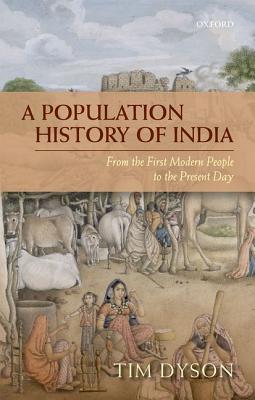
A Population History of India: From the First Modern People to the Present Day
Buy A Population History of India: From the First Modern People to
Tim Dyson A Population History of India: From the First Modern
Population (1757–1947) (V) - The Cambridge Economic History of
Population Bomb? The Debate over Indian Population Origins
THE POPULATION OF ANCIENT INDIA (500 BC to 100 AD) - JSTOR
The myth of India's population explosion - The Times of India
Notes on the Early History of the Growth of Population in India
Indian Immigrants in the United States migrationpolicy.org
Genetic diversity in India and the inference of Eurasian population
A Population History of India From the First Modern People to
Exploring the Largest Indian Population Outside of India
'The Indian population is a result of four migrations - The Hindu
History Exploring the Largest Indian Population - Culture Trip
American Indian Mortality in the Late Nineteenth Century: the Impact
The Population of India Currently - ThoughtCo
Our population is expected to grow to over 9 billion by 2050, yet the ability of our environment to provide space, food, and energy are limited. Explore population growth from 1 ce to 2050, see how our numbers impact the environment, and learn about the key advances and events allowing our numbers to grow.
The writers of the ancient history of india have not, as yet, made any attempt to estimate the population of this vast country in the early times.
Aggregation of urban and rural population may not add up to total population because of different country coverages.
India's terrain varies widely, from the thar desert in the west to jungles in the northeast. A fertile area called the ganges plain covers much of northern india. This formation was created from soil that was deposited by rivers running from the himalaya.
As the result of this india's population has increased rapidly from approximately 780 million in 1985 to 137 billion in 2019, however, the rate of growth has been.
Its capital is new delhi, built in the 20th century just south of the historic hub of old delhi to serve as india’s administrative centre. Its government is a constitutional republic that represents a highly diverse population consisting of thousands.
In the past decade, the country has witnessed accelerated economic growth, emerged as a global player with the world's fourth largest economy in purchasing power parity terms, and made progress towards achieving most of the millennium development goals.
The future growth and future changes in the composition of the population of china and india and the future trendsin.
Mortality, fertility, and migration each play a role in this population history. Its chapters cover prehistory and early history, ancient times and medieval times, mughal dynasties and the supremacy of the east india company, rule by the british crown and the emergence of an independent nation.
Archaeological excavations in the past 50 years have dramatically changed the understanding of india's past and, by extension, world history. A 4000-year-old skeleton discovered at balathal in 2009 ce provides the oldest evidence of leprosy in india.
India has been underrepresented in genome-wide surveys of human variation. We analyse 25 diverse groups in india to provide strong evidence for two ancient populations, genetically divergent, that.
India is the second most populated country in the world with nearly a fifth of the world's population. According to the 2019 revision of the world population prospects the population stood at 1,352,642,280.
This difference will result in india’s population size overtaking china's in less than 20 years. Differences in growth rate of southern indian states and empowered action group (eag) states, especially major states, bihar,.
It is a constitutional republic that represents a highly diverse population consisting of thousands of ethnic groups. With roughly one-sixth of the world’s total population, it is the second most populous country, after china.
According to 2001 census, population of india touched 102 crore.
0 million people in mar 2021, compared with the previously reported figure of 1,341. India population data is updated yearly, available from mar 1951 to mar 2021.
Pip: population growth is heralded as a major problem of india; it will determine to a large extent the living conditions of people for decades to come.
21 billion population of india, the majority living in maharashtra, rajasthan, gujarat and madhya pradesh, however, the influence of jainism has been far greater on the indian population than these numbers suggest.
A population history of india provides an account of the size and characteristics of india's population stretching from when hunter-gatherer homo sapiens first.
Using impeccably referenced sources, dyson estimates that indian population was four to six million about 4000 years ago, growing to 35 million, 187 million, and 389 million at the beginning of the christian era, 1800, and 1941 respectively.
23 jun 2016 unlike most other countries or parts of the world, india, like china, has always been a heavily populated country.
The government of india, politicians, policy-makers should initiate a bold population policy so that the economic growth of the country can keep pace with the demands of a growing population.
This chapter discusses the growth of population in the indian subcontinent during the period 1757-1947 and the determinants of the observed growth rates.
11 feb 2020 a debate on population is inevitable in a country that would surpass china's, currently the most populous country.
Durban has the highest concentration of indians outside of india.
Rapidly increasing population of india is a result of prevailing high birth rates and a large decline in the death rate in our country.
5 mar 2019 using impeccably referenced sources, dyson estimates that indian population was four to six million about 4000 years ago, growing to 35 million,.
But between them a gradual and punctuated decline in child mortality, in combination with in-migration, from the british isles, europe and the rest of the world,.
12 nov 2019 india is expected to continue to lead globally in contribution to population growth through 2050, followed by nigeria.
16 oct 2020 indian immigrant population in the united states, 1980-2019 jung, historical census statistics on the foreign-born population of the united.
The history of agriculture in india dates back to the indus valley civilization era and even before that in some parts of southern india.
1 feb 2020 tony joseph talks about his book, 'early indians', the many ancient migrations into this land, and why genetic purity is a myth.
Indians from north and south india first began arriving in the port of natal from india in 1860. Unlike east africa where almost none of the emigrants took to agriculture, in south africa indentured labour was primarily provided for agriculture and as servants, cooks, watchmen and builders at the natal-transvaal railways.
History of india's population when india gained independence from the united kingdom sixty years ago, the country's population was a mere 350 million. In 1950, india's total fertility rate was approximately 6 (children per woman).
The earliest literature 'rig-veda' reveals that some kind of population count was maintained in during 800-600 bc in india. The celebrated 'arthashastr' by 'kautilya' written in the 3rd century bc prescribed the collection of population statistics as a measure of state policy for taxation.
The history and culture of india begin along the indus river; the republic of india has the most religious diversity in the world. In india, was born hinduism, buddhism, sikhism, and jainism (* zoroastrianism) religion is vital in india.
23 jun 2020 due to higher population growth rate of india, margin between these two country is coming down quickly.
The origin of population geography as a separate topical study in human geography in india can be traced back to as early as the close of 1950s. Geographers associated with punjab university, chandigarh, played a pioneering role in the development of the sub-discipline in the country.
The population grew from the south asian stone age in 10,000 bc to the maurya empire in 200 bc at a steadily increasing growth rate, before population growth.
0 million people in mar 2021, compared with the previously reported figure of 1341.
Post Your Comments: