Read Strategies for Teaching Students with Severe and Low-Incidence Disabilities - Siegfried Engelmann | ePub
Related searches:
Strategies for Teaching Students with Learning and Behavioral
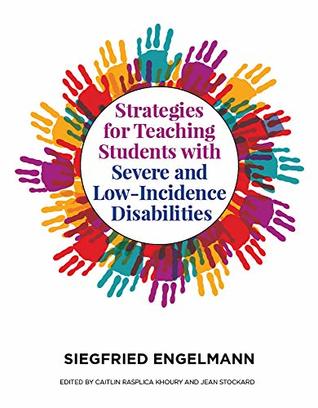
Strategies for Teaching Students with Severe and Low-Incidence Disabilities
Strategies for teaching students with learning and behaviour - NIEPID
Studying Tips and Advice for Students
Successful Strategies for Teaching Students with Learning
Strategies for Teaching Students with Intellectual
Strategies for Teaching Students With Learning Disabilities
Strategies for Teaching Students with Behavioral Problems
Teaching Students with Disabilities Center for Teaching
Strategies for Teaching Students with Mental Health
Top Teaching Strategies for Students with Dyslexia - The
20 Collaborative Learning Tips And Strategies For Teachers
Strategies For Teaching Children With Learning Disabilities - LDRFA
Strategies for Teaching Students with Intellectual Disabilities
Teaching Strategies for Students with Learning Disabilities - The
Differentiation Strategies for Gifted and Talented Learners
Effective Strategies for Teaching Students with ADHD - LDRFA
Instructional Strategies for Students with Cognitive
Teaching Strategies for Students with Communication Disorders
Teaching Methods & Strategies for Students with Dyslexia - Rev
Effective Teaching Strategies for Students With Emotional
Vaughn & Bos, Strategies for Teaching Students with Learning
Strategies for Learning and Teaching National Council for
Strategies for Teaching English to Students with Learning
6 Great Strategies For Dealing With ‘Difficult’ Students
Five Instructional Strategies for Children with Down syndrome
8 Simple School Strategies for Students With ADHD
Teaching Strategies for Students with Cerebral Palsy
Five Homework Strategies for Teaching Students With Learning
Structured Teaching Strategies for Students with Autism
Strategies for Teaching Kids with Special Needs by Kathryn Stout
Reading Connections: Strategies for Teaching Students with
Evidence-Based Teaching Strategies for Individuals with
10 Easy-to-Implement Behavior Strategies for Children with Autism
Teaching Tips and Strategies
Teaching Students with Disabilities Expert Advice & Strategies
Teaching Math to Students with Down Syndrome Time4Learning
Strategies Teachers Use to Help Kids Who Learn and Think
7 Effective Teaching Strategies For The Classroom - Blog
21 Strategies for Teaching Online: The Ultimate Guide Albert
Strategies for Teaching English Learners - Lorain City Schools
Strategies for Teaching Culturally Diverse Students
15 Guided Reading Activities, Classroom Accommodations, and
Instructional Strategies – For the Teachers
Resources and Examples: Learning in the Time of COVID-19
Growing Up With Epilepsy Teaching Students with Epilepsy
Teaching Strategies for the Remote Classroom
Ready to learn: 5 strategies to help students with learning
Thirteen Instructional Strategies for Supporting ELL
Six Strategies for Challenging Gifted Learners
Teaching Strategies Facing History and Ourselves
Instructional Strategies List for Teachers Instructional Strategies List
Effective General Teaching Strategies for Behavior Issues
Teaching Students with Disabilities Accredited Schools
Teaching Students with Autism Spectrum Disorder Scholastic
Helping Your Student with Dyslexia Learn: 5 Strategies to
6 Essential Strategies for Teaching ELLs Edutopia
TEACHING CHILDREN WITH ATTENTION DEFICIT HYPERACTIVITY DISORDER
How to Teach Children with Cerebral Palsy: 14 Steps
Three Strategies for Teaching Children PBS KIDS for Parents
Teaching Students With Executive Function Issues Resilient
Effective Teaching Strategies for Elementary School Students
This list of teaching strategies and activities was developed
Fortunately, the strategies outlined below are simply good teaching practices and should benefit the students with lds as well as the class as a whole. In fact, it is advised that the teacher make no indication to the class that a particular exercise is targeted at any individual or group of students.
With compacting, students get to throw away the part of the curriculum that they already know, while receiving full credit for those competencies.
Teach students how to look for the same or similar content in another medium (movie, filmstrip, audio tape, video tape, sticker book, photo album, field trip). * for students with cognitive or physical disabilities, educators must involve instructional strategies that are accessible throughout the daily schedule.
My classroom teaching strategies didn't adapt well to the distance, so i wasn't able to give my students my best.
Those types of activities can be carried on at home during breaks as reinforcement. Some children do well alternating between 10-20 minute work periods with 5-10 minute of exercise. Others can handle 60 to 90 minutes of instruction followed by a 10-15 minute break.
To understand oral directions and classroom instructional dialogue and to is already known, teachers use many strategies to help students activate their prior.
Students with down syndrome generally demonstrate good social skills, which can be utilized to increase learning and teaching opportunities. When speaking to a student with down syndrome, it is important to speak directly to them using clear language and short sentences.
Children with autism absolutely need to be taught coping skills and calming strategies for when they are feeling frustrated, anxious, or are having sensory overload. For lower-level asd students, they may need assistance with using these strategies and won’t be able to do them independently.
Strategies for teaching english learners increase comprehension: make meaning clear through visuals, demonstrations, and other means.
Udl is a type of teaching that gives all students flexible ways to learn and succeed. Udl strategies allow kids to access materials, engage with them and show what they know in different ways. There are many examples of how these strategies help kids who learn and think differently.
Teaching students with attention deficit hyperactivity disorder (adhd) or dyslexia can be a real challenge. These students are known for being inattentive, hyperactive, and impulsive which can lead to frustration on the part of the teacher. Students with adhd have a short attention span and just cannot focus on the study material.
Students with behavioral problems tend to get angry easily if corrected. Set up a system of rewards for the student and allow him to earn these rewards by following the rules, being a good class citizen and working hard to control his outbursts.
Additionally, incorporating teaching strategies for dyslexia, such as repeating directions, maintaining consistent daily routines, using step-by-step instructions, and combining verbal and visual information, help students better understand lessons.
Facing history offers student-centered teaching strategies that nurture students' literacy and critical thinking skills within a respectful classroom climate.
When kids have better self-control, they do better in school and get along better with others.
Many of us take the time to ensure that students are not only hearing the words that we speak, but actually taking a moment to let it soak in and really listen to them. While this may be quite a challenge for many of us, it is possible for students to actively listen as we teach. Here are 10 teaching strategies to help students listen today.
In accommodating math students with learning disabilities, author rochelle kenyon lists the following strategies for teaching a student with math-related learning disabilities.
Strategies in the classroom� kids and teens with adhd have unique needs in the classroom. Here are some strategies that parents and teachers of students with adhd can use to help them succeed at school.
Teaching strategies should focus on assistive technology, fine and gross motor skills, and personal care. Accommodations and modifications should include providing extra time for task completion. The following links provide information on teaching strategies.
Feb 19, 2018 strategies for teaching students with intellectual disabilities “my mama always said, 'life was like a box of chocolates.
The strategies that follow are intended to help teachers and specialists create these new opportunities for learning and can be incorporated into an existing.
One of the best strategies for teaching in an environment like this is to learn methods that help to prevent the occurrence of behavioral issues. While every student’s needs are different, there are some simple steps teachers can take to help prevent problems as a group. Increase the amount of supervision present during high-risk periods.
If the student has difficulty learning by listening, then try before the lesson.
High school is the springing board for students enterting into the real world, but do we give them enough infromation about student loans? no! long-term wealth fast money online / remote saving cash back money management learn about inves.
Strategies for teaching students with mental health conditions “mental health promotion should be the business of all teachers, who need to be conscious of their own emotional needs as well as being supportive of those of others.
Teaching strategies that strengthen executive functioning skills while benefiting the whole classroom while intervention can be difficult, creating a classroom environment sensitive and responsive to this fairly common issue benefits all students, even those without executive function issues.
Successful strategies for teaching students with learning disabilities posted by quandarymat october 15, 2013 october 14, 2020 research continues to confirm that we can teach students with learning disabilities to “learn how to learn.
Universal design for learning (udl) strategies udl is a type of teaching that gives all students flexible ways to learn and succeed. Udl strategies allow kids to access materials, engage with them and show what they know in different ways. There are many examples of how these strategies help kids who learn and think differently.
The classroom is a dynamic environment, bringing together students from different backgrounds with various abilities and personalities. Being an effective teacher therefore requires the implementation of creative and innovative teaching strategies in order to meet students’ individual needs.
Many students with learning difficulties process information visually. Teachers and parents can use those skills with comprehending lessons. For instance, after reading a chapter in a book, ask the student to draw a picture representing what they read. You can also take advantage of visual organizers to help students process their thoughts.
Merson documents a patient teacher's approach to finding the best strategies for teaching reading and writing to a learning disabled student. Teaching writing to college students with learning disabilities.
Competitive student athletes with rigorous training schedules, students with.
Activating strategies the aim of these types of teaching methods is to get students using their prior knowledge as they take on new learning tasks.
Speak directly to the student, using clear language and short sentences, and use appropriate and unambiguous facial expressions. Allow adequate time for the student to process language and respond. Structure learning and teaching opportunities to enable the student to engage in tasks with other students, who can act as appropriate role models.
Looking for actionable and concrete tips for teaching students with disabilities and helping them succeed? use this guide to find out about common disabilities, discover helpful teaching strategies, and read expert advice.
Reading out loud? have students stand up and walk around the classroom in a circle as they read along.
Teachers of students with visual impairments, as well as family members and other professionals who work with children who are blind or visually impaired, will find within this book a repertoire of strategies and activities for creating a balanced, comprehensive plan of reading instruction for each student and for teaching the essential reading.
You must come prepared each day eager to learn and willing to work hard. More than anything, teachers want to see growth and improvement from their students.
With the guidance of willis, cooper, and several other educators trained in autism, we’ve compiled 10 strategies to help you support the varying needs of students on the autism spectrum. Using visuals can help students with asd in a wide range of areas—from understanding rules to explaining social situations.
Teaching a child with cerebral palsy can seem challenging at first, but when you know the best ways to help your student learn, you can help them succeed. Whether you're a teacher, teaching assistant, or parent, getting to know your.
Check out these flashcard teaching strategies to become more effective in helping children use flashcards whether at home or at school. Ann logsdon is a school psychologist specializing in helping parents and teachers support students with.
Collaborative learning teams are said to attain higher-level thinking and preserve information for longer times than students working individually.
Apr 20, 2018 shannon gilfeather is a special education teacher at salk middle school in spokane, washington.
Strategies a statement in your syllabus inviting students with disabilities to meet with you privately is a good step in starting a conversation with those students who need accommodations and feel comfortable approaching you about their needs.
When teaching math to students with down syndrome, use a curriculum that uses their strengths to help them understand basic mathematical skills and numerical concepts. Learn which curriculum will work best with your students needs/learning.
A 70-year-old texas nurse who made the selfless decision to come out of retirement to help students through the pandemic has lost her life to covid-19, nbc dallas-fort worth reports.
Active learning: create a teaching and learning environment primed for student participation, such as calling on students to answer a question, individual reflection, think pair share and group problem-solving.
Teaching strategies for educators to support and advocate for their students. According to the national center for learning disabilities’ state of learning disabilities report, one in five children have a learning and/or attention disability that affects their ability to learn in a classroom.
By learning new strategies and teaching methods, educators can promote learning and actively stimulate children’s natural thirst for knowledge. The impact of an effective elementary school teacher can remain with a child for the rest of his or her life.
Provide a calm environment; minimize distractions student desk; emphasize routine; behavioral expectations should reflect.
Students with disabilities often need additional organizational support. Just as adults use calendars, schedulers, lists, and other devices to self-monitor activities, students can benefit from these tools as well.
Instructional strategies are techniques teachers use to help students become independent, strategic learners.
Schools play an important part in helping students with id learn these life skills, which include health and safety, personal hygiene, manners, getting along with others, basic math and reading, money management, and skills for the workplace.
Speech impairments include difficulties with articulation, voice strength, or the complete inability to produce speech. Stuttering, stammering, disfluency, hoarseness, breathiness, or breaks in volume or pitch are considered impairments as well.
May 7, 2020 this last component–facilitating online discussions–can be especially challenging for teachers who are not used to engaging students remotely.
Strategies for teaching students with learning and behavior problems presents more hands on applications and classroom strategies than any other methods text on the market. This new edition features a new emphasis on and integration of the common core state standards (ccss) throughout; updated coverage of rti; a new emphasis on higher level.
Are you a parent or teacher with students who have learning differences? children with adhd, reading disabilities, dyslexia and other disorders can experience.
Teaching strategies for dyslexia are designed to help students learn to read in a way that aligns with how their brain works. If your student with dyslexia is having a hard time learning literacy skills, use these four guided reading strategies and dyslexia exercises to help them turn their weaknesses into strengths.
Here is a sampling of strategies that teachers can use either to head off or to provide consequences for low- to medium-level student.
Helping children succeed in school� most instruction at home or in school can be adapted to accommodate the needs of students with learning disabilities such as dyslexia or other learning problems. These strategies can be used to modify instruction in most subject areas to improve students' comprehension of tasks and the quality of their work.
What are learning disabilities? role of formal assessment; ld students in your composition classroom; ld students in a writing center tutorial; teacher.
Post Your Comments: