Read Deliberative Democracy: Understanding the Indian Experience - Teresa Joseph | ePub
Related searches:
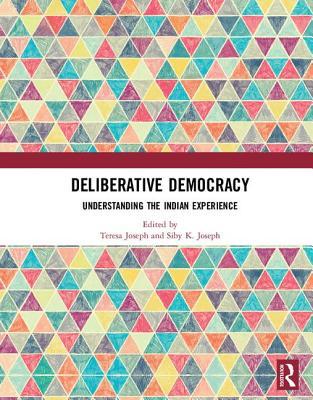
Deliberative Democracy: Understanding the Indian Experience - 1st
Deliberative democracy as a means to increase the understanding
Deliberative democracy and the age of - Understanding Society
Deliberative Democracy and the Challenge of Global Governance
Participatory and Deliberative Democracy Strategies for the
Understanding Society: Deliberative democracy and the age of
Deliberative Democracy and the Discursive Dilemma
Reasoning Is for Arguing: Understanding the Successes and
(PDF) The Internet, deliberative democracy, and power
Education for Deliberative Democracy and the Aim of Consensus
Deliberative Democracy (Cambridge Studies in the Theory of
How deliberative democracy could depolarize the US - Big Think
The Use of Deliberative Democracy - SlideShare
“2. The Theory and Practice of Deliberative Democracy” in
Key Aspects of the Deliberative Democracy Movement
The Prospects & Limits of Deliberative Democracy American
Others, meanwhile, take issue with deliberative democracy's dominance in the field of democratic theory and practice.
Deliberative democracy basics this concise, essay length guide covers the basics of deliberative democracy by canvassing a spectrum of theories on the subject. It explains what is unique about deliberative theories of democracy, what they all have in common, as well as how they differ.
The idea that, thanks to deliberative democracy, society is made more transparent, the average citizen reaches a better understanding of the society in which.
Deliberative democracy is a technique that stabilizes citizens' interests by diminishing domination, despotism, and better assessing public choices. This paper found that deliberation legitimizes government decisions and maximizes the outcome of the policies.
Talk of deliberative democracy is to be justified ~goodin 1999. But i think that it is better to leave that question open and to take the centralised or collective picture of deliberative democ-racy as a more specific version of a broader ideal. The discursive dilemma so much for the different elements in the ideal of deliberative democracy.
Deliberative democracy is one of the most influential ideas in modern political thought. Advocates want citizens to actively participate in the democratic process by seriously deliberating over important issues. Deliberative democrats expect more of voters than merely acting to “throw the bums out” if things seem to be going badly.
This special number of the journal politics and society represents an important advance in our understanding.
This book is a pioneering analysis of the deliberative systems approach in taiwan, extending an understanding of taiwanese democratic politics and consolidating links between theoretical development and a practical application of deliberative practices. As a front-runner of new democracies in asia and a relatively open society, taiwan provides a model for deliberative governance, with a view.
(2004) deliberative democracy and civil society — an expansion of jürgen habermas’s understanding of civil society.
In deliberation, people don’t have to walk away with a consensus, but will have achieved a deeper understanding of each other. Whether everyone is happy with the result or not, understanding of different perspectives on issues facilitates future conscientious approaches to those issues.
We are seeing an increased recognition of the need for deliberative democracy. Peter miles frsa shares his experience of a technology-enabled structured dialogue methodology that actively supports a diverse group of stakeholders and experts to develop a deep and shared understanding of a complex challenge and then commit with confidence to a way forward.
Indeed, proponents of deliberative democracy typically argue that inclusive and authentic deliberation will lead to deeper understanding 22 inducing citizens to adopt an empathetic and understanding perspective may also lead to what gutmann and thompson call moral accommodation (1996: 79-91). 23 as robert goodin (2003: 171) notes, empathetic understanding may be triggered by a form of internal, reflective deliberation that takes place within the minds of citizens.
Deliberative democracy produces citizens who are more informed, active, responsible, open to the arguments of others, co-operative, and fair. Consequently, deliberation has a community-generating power stemming from the very process of expressing an opinion in public.
Overview – deliberative democracy and citizen empowerment introduction democracy without citizen deliberation and participation is ultimately an empty and meaningless concept. This understanding of politics, and many people’s desire to supplement the representation they receive via elected politicians, is often the starting point for a growing.
A way to fight fake news, apathy, and divison by creating spaces to talk.
Reasoning is for arguing: understanding the successes and failures of deliberation abstract theoreticians of deliberative democracy have sometimes found it hard to relate to the seemingly contradictory experimental results produced by psychologists and political scientists.
Besides the inspiration from the ostbelgien model to establish a permanent entity, the deliberative democracy design adopted in brussels follows the 2012 irish constitutional convention approach of bringing together parliamentarians and randomly selected citizens.
This concise, essay length guide covers the basics of deliberative democracy by canvassing a spectrum of theories on the subject. It explains what is unique about deliberative theories of democracy, what they all have in common, as well as how they differ.
Deliberative democracy can result in number of, ongoing and often transformative benefits that include: increasing participants’ levels of knowledge about issues (more broadly), resulting in more informed, considered views cultivating trust between authorities and communities, building civic.
What is deliberative democracy? most fundamentally, deliberative democracy affirms the need to jus-tify decisions made by citizens and their representatives. Both are ex-pected to justify the laws they would impose on one another. In a democracy, leaders should therefore give reasons for their decisions,.
As a corrective, we confront directly the philosophical issues raised by habermas’s development of critical theory. By situating his work in the context of philo-sophical debates in critical theory, both before and since habermas, we show how critical theory has persistently failed to identify universal philosophical foundations from which to derive normative positions.
Although deliberative democracy encompasses a broad spectrum of ideas, the that allow democratic decisions to be a result of mutual understanding, publicly.
Deliberative democracy is a field of political inquiry that is concerned with improving collective decision-making. It emphasizes the right, opportunity, and capacity of anyone who is subject to a collective decision to participate (or have their representatives participate) in consequential deliberation about that decision.
No doubt, by stating that democracy cannot be reduced to a question of procedures to mediate among conflicting interests, deliberative.
Deliberative democracy can be seen as a part of the agenda of deepening democracy, wherein the public deliberation of citizens forms the basis of legitimate decision-making, with the people participating directly in the deliberations or making of decisions that affect them.
Why deliberative democracy?contributes to our understanding of how democratic citizens and their representatives can make justifiable decisions for their society in the face of the fundamental disagreements that are inevitable in diverse societies. Gutmann and thompson provide a balanced and fair-minded approach that will benefit anyone intent on giving reason and reciprocity a more prominent place in politics than power and special interests.
17 jan 2020 photo credit: democracy chronicles the lessons will be key in understanding the opportunities and risks of 'deliberative committees' and their.
Website of the directorate for public governance at the oecd, a source of policy solutions, data, expertise and good practice. Public authorities from all levels of government increasingly turn to citizens' assemblies, juries, panels and other representative deliberative processes to tackle complex policy problems ranging from climate change to infrastructure investment decisions.
Deliberative democracy can be seen as a part of the agenda of deepening democracy, wherein the public deliberation of citizens forms the basis of legitimate.
1 oct 2016 bessette in his 1980 work deliberative democracy: the majority principle in republican government.
Deliberative democracy, deliberation, group decision-making, legitimacy, political decision-making the nobel laureate daniel kahneman summarizes the dual-process theory of judgment and decision-making as a distinction between “thinking fast and thinking slow.
Deliberative democracy is a form of direct democracy that has learnt from the pitfalls of earlier experiments in direct democracy. A common leftist goal, it has only taken place in a few limited situations so far around the world. A selection of constituents is randomly drawn for a citizens’ jury.
Book description this book is a pioneering analysis of the deliberative systems approach in taiwan, extending an understanding of taiwanese democratic politics and consolidating links between theoretical development and a practical application of deliberative practices.
Deliberative democracy or discursive democracy is a form of democracy in which deliberation is central to decision-making.
A deliberative democracy seeks to fully utilize tools already available to the public. The idea is to have a transparent process for decision- making.
Why deliberative democracy? contributes to our understanding of how democratic citizens and their representatives can make justifiable decisions for their society in the face of the fundamental disagreements that are inevitable in diverse societies. Gutmann and thompson provide a balanced and fair-minded approach that will benefit anyone intent on giving reason and reciprocity a more prominent place in politics than power and special interests.
Deliberative theorists understand democracy as more authentic, deep, participatory, inclusive, engaged, empowering, and, in fact, democratic, than most� or all,.
This article examines the contribution that international law can make to the recognition of minority interests and preferences through a deliberative understanding.
The concept of deliberative democracy, in turn, involves the idea that deliberation eventually leads to binding collective decisions. Furthermore, deliberative democracy requires the inclusion of all different values and interests relevant to a collective decision. Arguments put forward in democratic deliberation should be considered equally on their merits; in other words, by the consistency and the epistemic qualities of arguments and the reasonableness of the claims put forward.
Deliberative democracy and beyond takes a critical tour through recent democratic theory, beginning with the deliberative turn that occurred around 1990.
26 aug 2020 this book puts forward a novel understanding of processes of deliberation that is sensitive to the goals and contexts in which these processes.
Minorities claim for a new understanding of the democracy from the difference, from the identity.
Deliberative democracy, school of thought in political theory that claims that political decisions should be the product of fair and reasonable discussion and debate among citizens. In deliberation, citizens exchange arguments and consider different claims that are designed to secure the public good.
The journal of deliberative democracy (jdd) was relaunched last august. Building on the strengths of its predecessor, the journal of public deliberation, jdd aims to publish high quality research and curate timely symposiums that add value to our understanding of the theory and practice of deliberative democracy. The inaugural issue published seven research articles on the topic frontiers of deliberative democracy.
Deliberative democracy is a theoretical model for a kind of government that emphasizes equal political participation in a public forum. By doing so, political representatives can govern in a way that better reflects the desires of the people.
22 jul 2019 thus, any epistemic version of deliberative democracy will attribute epistemic value to democratic participation and deliberation.
Contributes to our understanding of how democratic citizens and their representatives can make justifiable decisions for their society in the face of the fundamental.
In the conclusions, i'll try to highlight what is really at stake in the correct understanding of the relation of governance to democracy.
26 nov 2019 they are just one aspect of deliberative democracy and involve randomly a better understanding of how public authorities have been using.
‘deliberative democracy has the potential to bring new life and legitimacy to our ailing democratic system. ’ matt taylor, ceo rsa (royal society of arts) when i worked in tanzania, i often came across tourists in zanzibar who had been advised by their expensive hotels that for safety reasons they should not venture from the hotel beach area.
Deliberative democracy is an approach to democracy that puts people at the center and that is more voice-centered than vote-centered. In this conception of democracy, individuals play a more robust role from the local to the global levels.
Deliberative democracy, largely be based on public deliberation. By placing public deliberations at the heart of democracy, the political order can be justified, they argue. However, they also argue that the political order should be justified to everyone living under its laws (chambers, 2003).
Deliberative democracy, or public deliberation, is one form of citizen participation, alongside a diversity of other approaches. Public deliberation has four characteristics that distinguish it from other discourses and practices of engagement, involvement, participation, and consultation.
Democracy without citizen deliberation and participation is ultimately an empty and meaningless concept.
Abstract the growing literature on deliberative democratic practice finds that deliberation is a difficult and relatively rare form of communication. Each moment of a deliberative encounter raises significant obstacles in the path to stimulating greater intentional reflection on public issues. I explore these obstacles in the context of other empirical work in political and social psychology.
In spite of the global diffusion of democracy and a general commitment to an ideal starting point in understanding the core concepts of deliberative democracy.
27 dec 2020 in fact, deliberative democracy is a normative political theory that stipulates how political practice should occur, rather than explaining it [25].
Deliberative democracy emphasizes reaching a consensus on public affairs including decision-making and legislation for public interests with universal participation of citizens under the background of a pluralistic society.
We survey the evolution of the ideals of deliberative democracy, their numerous sites in deliberative systems, the places of these sites within broader political arenas, and the many critics, criticisms, and revisions the concept and practice of deliberative democracy have attracted.
I then propose a version of deliberative democracy that is grounded in non-veritistic epistemic goals. In particular, i argue that deliberation is valuable because it facilitates empathetic understanding. I claim that empathetic understanding is an epistemic good that doesn’t have truth as its primary goal.
15 feb 2012 deliberative democracy is a field of political inquiry that is concerned with improving collective decision-making.
The theoretical critique of liberal democracy and revival of par-ticipatory politics gradually developed through the 1970s. 9 it was only in the 1980s, however, that a concept of deliberative democracy began to take deªnite shape. The term “deliberative democracy” seems to have been ªrst coined by joseph bessette, who argued.
It is the latest development in a new wave of contemporary deliberative democracy, based on the premise that political decisions should be the result of reasonable discussion among citizens. The council’s inaugural twenty-four members will rotate out over an eighteen-month period; every six months, eight members will be replaced by a new group. 2 new members will be randomly invited through a civic lottery�.
31 oct 2014 a general claim of the thesis is that deliberative democrats would gain a better understanding of the democratic potential of state-sponsored.
Roots in classic normative conceptions of democracy; it derives from the premise that “democracy revolves around the transformation rather than simply the aggregation of preferences” (elster 1998).
Deliberative democracy is a timely book by an excellent group of scholars that examines an issue of major political importance: the merits of decision making by deliberation. Everyone interested in democratic theory and practice should read this far-ranging, thoughtful, and provocative collection.
Book description deliberative democracy can be seen as a part of the agenda of deepening democracy, wherein the public deliberation of citizens forms the basis of legitimate decision-making, with the people participating directly in the deliberations or making of decisions that affect them.
Deliberative democracy is an approach to politics in which citizens, not just experts or politicians, are deeply involved in public decision making and problem-solving.
Consensus is, therefore, embedded in this understanding of democracy as an underlying ideal, because, if every citizen should be able to accept the outcome of the decisions, and/or the reasons for them, the democratic process needs to aim toward some kind of understanding of consensus.
Why deliberative democracy?contributes to our understanding of how democratic citizens and their representatives can make justifiable decisions for their society in the face of the fundamental disagreements that are inevitable in diverse societies. Gutmann and thompson provide a balanced and fair-minded approach that will benefit anyone intent.
It is difficult to see how equality—a key principle of deliberative democracy—is achieved when deliberative groups are largely white and middle-class. Although every person who is engaged in deliberation may have an equal opportunity to speak, not every person is so engaged when groups are self-selected.
Deliberative democracy or deliberative engagement is all about placing people (citizens, residents, affected.
I then propose a version of deliberative democracy that is grounded in non‐veritistic epistemic goals. In particular, i argue that deliberation is valuable because it facilitates empathetic understanding. I claim that empathetic understanding is an epistemic good that doesn't have truth as its primary goal.
Why deliberative democracy? contributes to our understanding of how democratic citizens and their representatives can make justifiable decisions for their society in the face of the fundamental disagreements that are inevitable in diverse societies. Gutmann and thompson provide a balanced and fair-minded approach that will benefit anyone intent.
While official deliberation is the purview of politicians and members of the court, it's worth noting that deliberative democracy doesn't mean inactivity from constituents.
Essential to understanding the concept of deliberation is the recognition of the core objective to create a respectful environment that allows participants to consider the arguments of others. This core objective allows for participants to potentially transform their valuesand preferencesto allow for a collective decision-making outcome.
This essay reflects on the development of the field of deliberative democracy by discussing twelve key findings that capture a number of resolved issues in normative theory, conceptual clarification, and associated empirical results. We argue that these findings deserve to be more widely recognized and viewed as a foundation for future practice and research.
Deliberative democracy has received much attention in recent years as a possible solution to this malaise. Its promise of a more engaged and collective form of politics has drawn the interest of policy makers and political philosophers – generating new avenues of thought in contemporary democratic theory as well as heated debates about its utility in practice.
What is deliberative democracy? deliberative democracy is a field of political inquiry that is concerned with improving collective decision-making.
Post Your Comments: